
Joseph Roth was an alcoholic refugee in Paris prior to the last war. He wrote The Legend at a leisurely pace over the first four months of 1939 and died in the fifth before reaching the age of forty-five. The translator, Michael Hofmann, comments, 'it is clear Roth for some time had been running out of reasons to remain alive'. A sad reflection on sorry times. The book, however, is in no way sad, even though it charts the last few days of another drinker. Quite the opposite, it is a heart warming tale, a redemptive tale of one man's earnest endeavour to be decent. Whether he fails or succeeds is almost irrelevant because it is in his effort that he is blessed.
 To the point: the book is written in a very individual style that, to my mind, reflects the world view of an inveterate inebriate. There is a dignity to the prose of a man doing his best to hold himself erect and not stumble. There is sense of confusion about what is happening and why it is happening, and small mercies are accepted as miracles without the need of further explanation.
These are the opening lines:
'On a spring evening in 1934 a gentleman of mature years descended one of the flights of stone steps that lead from the bridges over the Seine down to its banks. It is there that, as all the world knows and so will hardly need reminding, the homeless poor of Paris sleep, or rather spend the night.'
From these few lines, it is possible to recognise the voice of a seasoned author and the world view of the protagonist who is yet to be introduced.
The voice is visible in the confidence of expression, the world view in the weariness of the observation 'as all the world knows and so will hardly need reminding'.
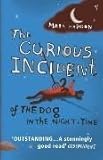 Another book with a very recognisable world view, one that most will be familiar with, is The Curious Incident of the Dog in the Night Time by Mark Haddon. Christopher, the fifteen old protagonist, has Asperger's and, therefore, an idiosyncratic means of engaging with the world. Haddon so well describes the logic of his central character that, as a reader, you find it a mind-wrench to detach yourself from applying the same reasoning to your own personal life.
 The final book I was going to comment on was If nobody speaks of remarkable things by Jon McGregor because of its lyrical quality; overall though I was disappointed. To coin a neologism, it is CCTV literature; one of remote observations on the minutiae of those living on an anonymous street in an unnamed northern town. Very occasionally it takes you into a close-up to the only named character who is coming to terms with the fact she is pregnant. Although the opening presages a disaster that is only revealed on the final pages of the book, by that time I had long lost interest. (In any case, I had guessed the disaster correctly from the beginning.) The reason why I was going to select this as an example of a novel with a view of the world that reflected the attitudes of its characters was because of its language which, though poetic, is distant and uninvolved, qualities, I believed that commented on contemporary society. However, I was disappointed to pick up another book by McGregor, So many ways to begin, to discover he employs exactly the same tone to describe what I presume must be a different situation. Least I hope so. The first, in my estimation, was over-written.
 Instead, I will choose In Search of Adam where Caroline Smailes invents not only a tone to match the outlook of her chief character but a form of writing that physically illustrates her fractured view point, and enhances the reader’s comprehension of the post trauma of child abuse. She achieves the same in Black Boxes, but is wise and intelligent enough not to employ the same tone or methodology but creates a new form of literature out of the scraps, the detritus that constitutes contemporary written communication. Both are brave and both work.
The conclusion is good writing, far from telling you how a character sees the world, demonstrates the individual's psyche in its structure, language and composition.

